

Alberta’s Referendum Has a Language Problem
Before voters mark the box, they should ask who loaded the question.

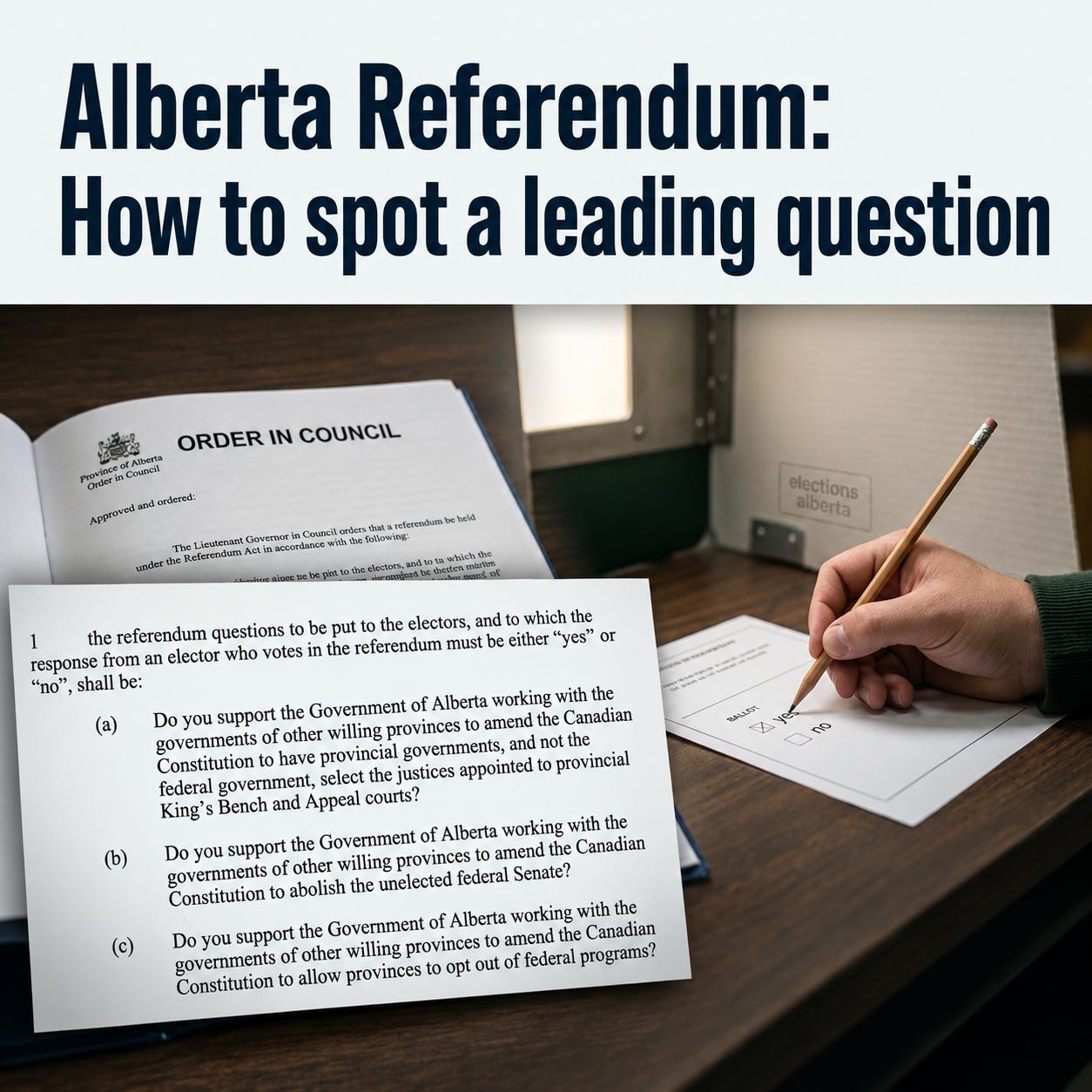
A referendum should ask questions which are simple and straightforward.
That sounds obvious. But as Alberta heads toward its October 19 ballot, voters will find something different: questions that don’t just ask, they argue, frame, assume, and nudge. They dress political objectives in the calm clothing of procedure and common sense.
That is not a small thing. The way a question is asked can shape the answer before a pencil is lifted.
Start with the separation question:
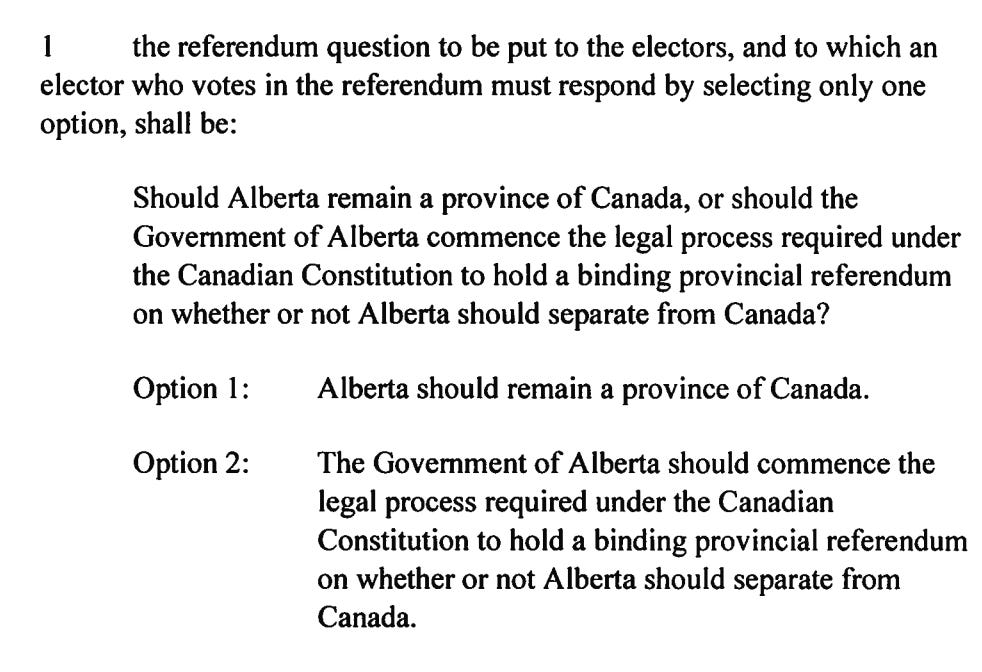
Notice the asymmetry. Option one is six words: Alberta should remain a province in Canada. The other choice is loaded with legalese busy words, all doing their work to make it sound like a cozy option. Strip it down and the meaning is simple: should Alberta start down the road toward a separation vote? But that’s not how it’s framed. Voters are asked whether the government should “commence the legal process required under the Canadian Constitution.” Sober. Lawful. Almost boring.
That is precisely the point. A process toward separation is still a process toward separation. Calling it constitutional doesn’t make it any more honest.

The immigration question runs the same play. It asks whether Alberta should take “increased control over immigration for the purposes of decreasing immigration to more sustainable levels.“ More sustainable than what? That phrase assumes current levels are already unsustainable, which is a political position presented as simple fact. Then it promises to give “Albertans first priority on new employment opportunities,” quietly planting the idea that newcomers are taking something that belongs to someone else.
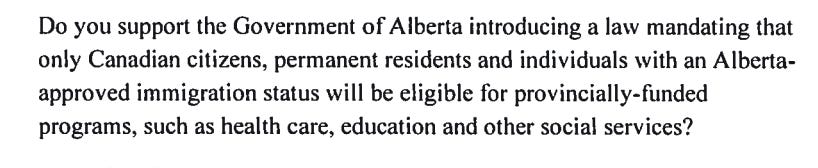
Another question proposes restricting “provincially funded programs such as health care, education and social services” for those without permanent status. Provincially funded programs sounds like a tidy accounting category. Health care and schooling for children are not accounting categories. The question sounds administrative. The consequences are not.
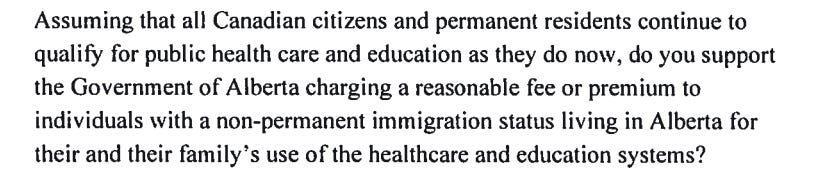
Then there’s the proposal to charge a “reasonable fee or premium“ to non-permanent residents for health care and education. Reasonable according to whom? Nobody campaigns for an unreasonable fee. The question has already done half the persuasion before the voter answers.

The voting question asks whether people should produce proof of citizenship, such as a passport, birth certificate, or citizenship card to vote in provincial elections. On the surface, clean. In practice, documents get lost, names change, passports expire. For older voters, low-income voters, and people who move frequently, that could prove problematic.
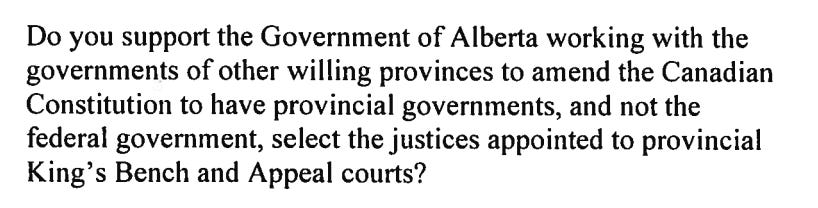
The constitutional questions reach for the same sleight of hand, just with bigger stakes. One proposes that provinces appoint their own judges to provincial courts rather than Ottawa doing it. Framed as provincial tidiness. But judicial independence isn’t housekeeping, courts are one of the fundamental checks on government power, at every level.

Another asks whether Alberta should abolish the “unelected federal Senate.” Unelected is accurate. It’s also a verdict rendered before the question is asked. There’s no mention of regional representation, legislative review, or any role the Senate might play. Just the word “unelected,” doing its work.
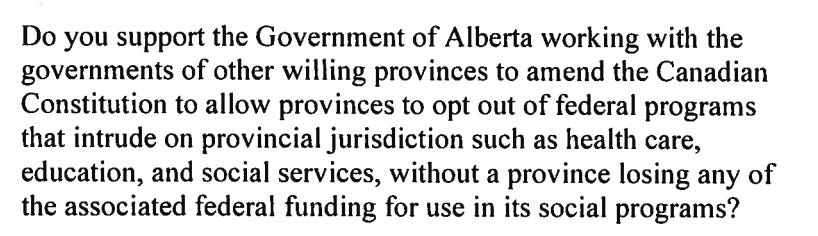
And then this: should provinces be allowed to opt out of federal programs that “intrude on provincial jurisdiction?” Intrude. Not “overlap.” Not “operate within.” Intrude as in trespass, invade, violate. A final question asks provinces to “protect” their rights from federal “interference.” The language has already cast heroes and villains before voters mark their ballots.
This is the referendum package as a whole: political positions dressed as neutral descriptions of common sense. Sustainable. Reasonable. Legal. Protect. Intrude. Interference. These are not throwaway words. They are the machinery of persuasion.
Media literacy usually gets taught as a defence against misinformation and internet garbage. Fair enough. But the harder skill is recognizing loaded language when it arrives from official sources, in formal grammar, stamped with government authority.
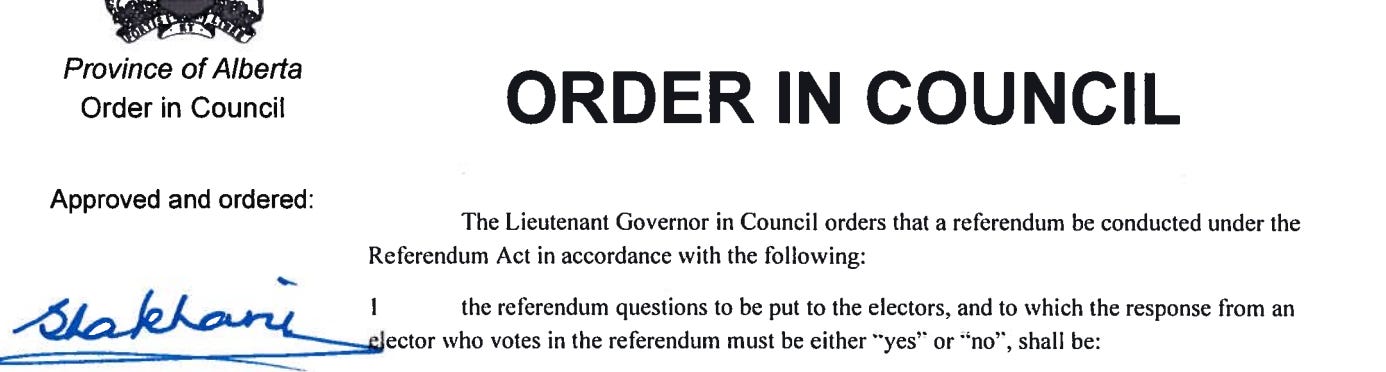
Alberta voters deserve plain questions. If the issue is separation, say separation. If the issue is restricting services for certain immigrants, say that. If it’s changing how judges are appointed, weakening federal authority, or abolishing the Senate say it plainly and let voters decide.
Before answering, translate the questions. Strip out the soothing verbs. Remove the loaded adjectives. Watch for the assumptions hidden inside the sentence. Ask what the question would look like if it were written by someone who disagreed with it.
That is the test. Because a ballot is an instrument of democracy — and democracy depends not only on the right to vote, but on the right to understand what you’re actually being asked.