
Inside the Gap Between Breaking News and Real Life
What a Sunday of smoke, rumours, and rolling news loops taught me about fear, perception, and seeing breaking news from the other side of the lens.

When all hell was breaking loose in Puerto Vallarta last Sunday, my first instinct was to start writing. I had the bones of a first draft ready by that night, and discussed some of what I wanted to say with my group of friends at the Mar Y Sol Hotel. After that conversation I decided to sleep on it.
All week I have written and re-written my impressions. But nothing felt like it was hitting the right notes. Too dramatic. Too detached. Too analytical. And frankly, that first draft felt disrespectful to the people who were worried for loved ones, or who were genuinely fearful for their lives.
So I waited.
One of the quiet luxuries of working for myself now is this: I don’t have to publish something just because I have to hit a deadline. For forty years, I didn’t have that choice. The slot needed filling. You filed whether the story had settled inside you or not.
This one needed to settle.
Let’s start with something important. On that Sunday, the day Puerto Vallarta was hit by coordinated attacks, I was not there. I was an hour north, at a hotel in Guayabitos.
Like many people, I was trying to understand what was happening in real time. I shared a couple of images circulating in local Puerto Vallarta Facebook groups. They were not mine. In hindsight, I should have made that clearer in the moment. Some friends back in Canada were understandably alarmed, and I don’t want to create the impression that I was in the middle of the action, or worse, claim proximity I didn’t have.
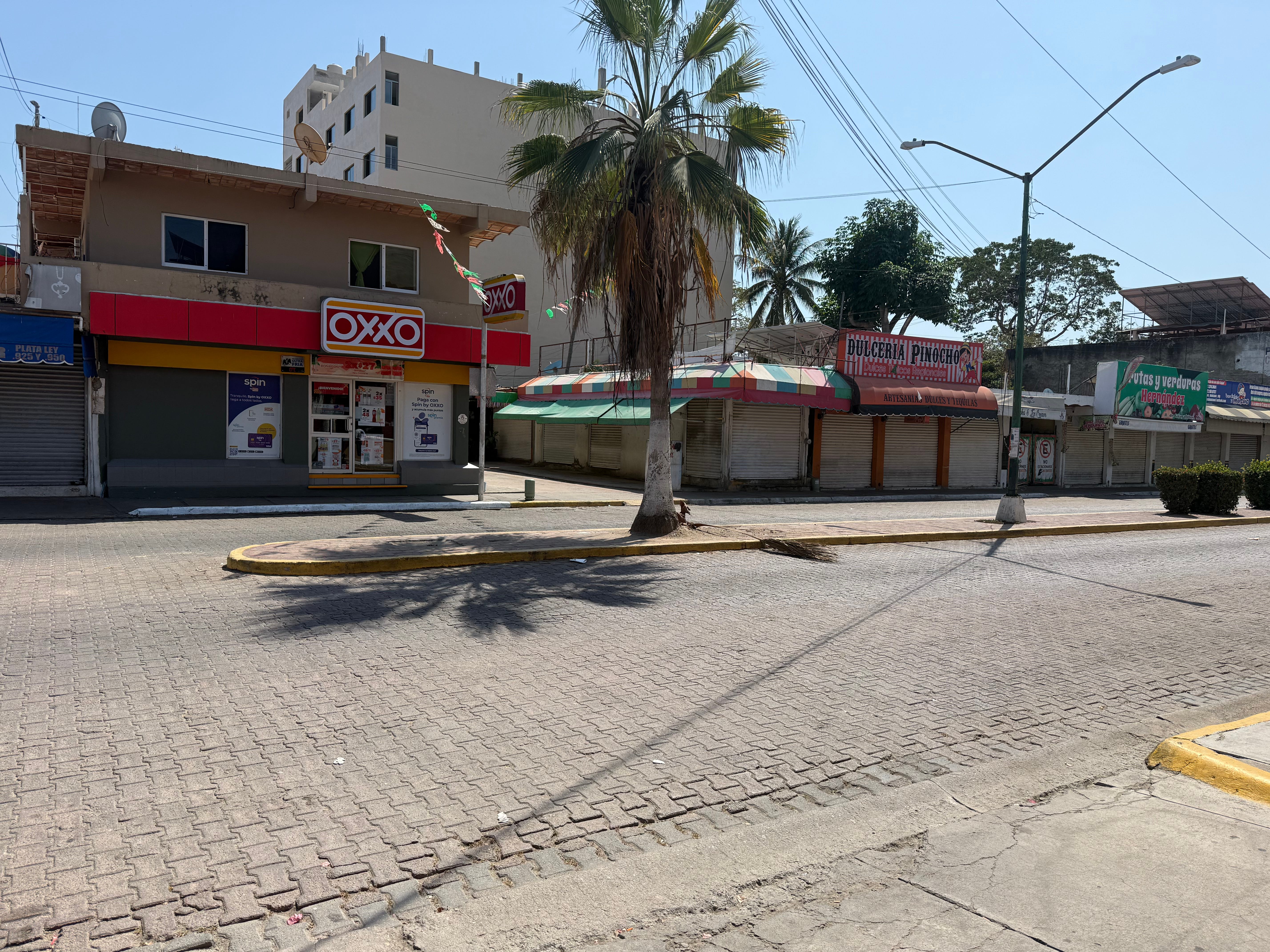
What happened that day was serious.
But it was also specific. This was not random violence spilling into tourist zones. It was an orchestrated act designed to send a message, primarily directed at the state, and symbolically at corporate infrastructure. The apparent targets were convenience stores belonging to a major national chain, owned by FEMSA, the enormous multinational that also happens to be the world’s largest Coca-Cola bottler and operates fuel stations and pharmacies across Mexico.
There is no shortage of speculation about motives. I’m not interested in adding to that noise.
What matters is this: no tourists were injured. The violence was concentrated and brief. It unfolded over a matter of hours. But if you were watching from afar, especially through the filter of television news or social media, you might reasonably have believed it was ongoing for days.
That gap between reality and perception is what stayed with me.
At our hotel in Guayabitos, we were asked to shelter in place. The front gate was locked. Shops and restaurants nearby shut down. It created an atmosphere of uncertainty, but not hysteria. We could leave if we wanted and no one was cowering in the corners.
The questions people asked were practical:
Where do we find food? Is anything open? And, in true vacation fashion: do we still have enough beer?
Eventually, the answer to the first question arrived in the form of a beachside food vendor who set up anyway. He did brisk business. Life found its rhythm again, even under the shadow of uncertainty.
By the next day, our little corner of Mexico was essentially back to normal. And yet, if you turned on a television anywhere, you might still have seen burning vehicles and smoke-filled streets on an endless loop.
I understand why. Compelling footage is the lifeblood of breaking news. Repetition reinforces importance. It fills airtime. It tells audiences this matters. I spent decades making those calls.
But this was the first time I experienced the other side, as a civilian, indirectly touched by an unfolding story that I would once have helped package and broadcast. It was clarifying.
Friends reached out asking if the violence was still ongoing. It wasn’t. But they had seen the same images, again and again, without context about when they were recorded.
A small suggestion to former colleagues: timestamp matters more than we sometimes acknowledge. When dramatic footage loops without clear reference to when it happened, audiences understandably assume it is still happening.
And then there is social media which provided the accelerant. Rumours moved faster than facts.
Unverified reports filled the gaps where official information was slow to emerge. Each repost, however well-intentioned, added another layer of uncertainty. Whoever orchestrated the attacks likely understood this dynamic perfectly. Fear travels quickly on social media. Perception expands the impact beyond the physical event.
And yet, inside our small hotel that day, something else was happening too. People introduced themselves to neighbours they hadn’t spoken to all week. Suddenly we all had something in common. Strangers compared notes, reassured each other, swapped updates.
It wasn’t dramatic. It wasn’t heroic. But it was human.
For all the noise, the loops of burning vehicles, the speculation, the breathless commentary, what I saw firsthand was a temporary disruption that revealed something quieter: how quickly community can form when normal routines pause.
Puerto Vallarta returned to normal by most accounts within a day. So did Guayabitos.
What lingers for me is not fear, but perspective. Stories don’t just unfold on the ground.
They also unfold in how they’re told and retold.
And sometimes, the most honest thing you can do is wait until the noise settles before adding your own voice to the story.
Thank you for the measured and provoking thoughts.