

The Grievance Merchants
Ten signs someone is feeding you anger instead of leadership

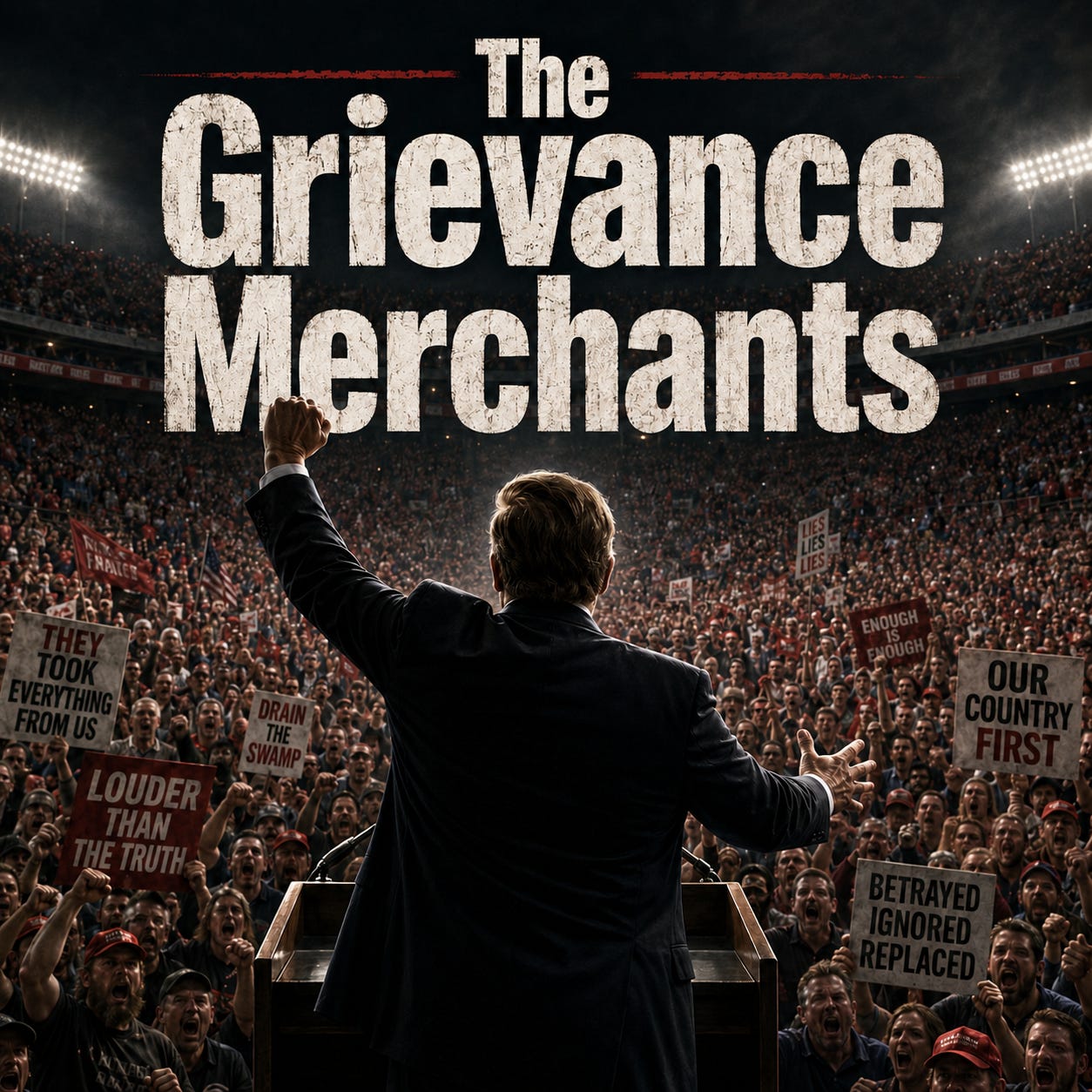
The fuel behind Alberta’s separatist movement is the politics of grievance. Convince enough people they face some deep injustice, and you can mold it into a political force. “They are doing it to you” is the familiar rallying cry. Who “they” are depends on the grievance you’re pushing. In Alberta, it’s the federal government. For ten years, Justin Trudeau got blamed for pretty much every terrible thing that happened in the province. What makes that particularly preposterous is that the only oil pipeline to the west coast was built under Trudeau’s watch, with federal dollars. Yet the familiar beefs about pipelines and how Ottawa doesn’t love us never stopped.
Grievance politics landed in Canada in a big way in 1987, when Preston Manning launched the Reform Party. Built on old western resentments about being ignored by Ottawa, it drew on a particular inheritance: Manning’s father Ernest was a firebrand radio preacher and Premier of Alberta for 25 years. Reform championed law and order — criminals got off too soft. Direct democracy — politicians needed more accountability. It opposed special status for Quebec — why should they get treated differently? Every plank in the platform was built on grievance.
That legacy lives on in Pierre Poilievre. As CPC leader, he attacked Trudeau endlessly and mercilessly. Trudeau was responsible for everyone’s mess. The message resonated in Alberta, where Jason Kenney had played the same card to merge the Progressive Conservatives with Wildrose. Kenney became a victim of his own success, steering the party into such extremes that when a real crisis hit and he had to make unpopular decisions, his own party turned on him.
The loudest example, though, is happening south of the border. When Donald Trump descended the golden escalator in 2015, he launched an era of grievance politics it may take generations to recover from. Immigrants are rapists and thieves. They’re taking your jobs. They’re eating the dogs and cats. Other countries are ripping off America. NATO is a scam. Every post on Truth Social, every public statement, is grievance and anger posing as leadership.
Where the politics of grievance leads to
Grievance politics brought us Hitler, Mao Zedong and Benito Mussolini. In Rwanda it sparked genocide. The generations that followed understood that, and treaded carefully. We seem to have forgotten.
So, in the interest of seeing things clearly, here are ten things to watch for in the politics of grievance.
1. They talk endlessly about betrayal. Everything begins with what was taken from you, who humiliated you, who laughed at you, who ignored you. Sometimes betrayal is real. But if betrayal is the whole argument, it’s not taking you anywhere.
2. They never explain the cost. Real solutions come with numbers. What will it cost? Who pays? What gets cut? What gets built? Grievance either avoids saying that, or promising rainbows and unicorns.
3. They identify enemies, not choices. A serious leader says: here are the tradeoffs. A grievance merchant says: here are the villains. That distinction matters. Politics requires choices. Propaganda requires enemies.
4. They promise to get even. Punishment is a theme in grievance politics. Make them pay, make them feel pain. You can punish your rivals all you like, but it’s not going to improve anything.
5. They treat doubt as disloyalty. Ask a practical question and suddenly you’re a traitor, a coward, a sellout, part of the problem. That is always a warning sign. Good ideas can survive questions. Bad ideas need loyalty tests.
6. They confuse volume with leadership. Being loud is not the same as being right. Rage can fill a room, dominate a microphone, and light up a social media feed. That doesn’t mean anyone is offering solutions.
7. They turn every failure into proof of conspiracy. When facts go against them, the system is rigged. When experts disagree, the experts are corrupt. When voters hesitate, the voters have been brainwashed. This is how grievance protects itself from reality.
8. They offer slogans where a plan should be. Axe the Tax. Make America Great Again. Don’t Tread on Me. Fine. But then what? A slogan is not a plan, it’s a bumper sticker or a ball cap.
9. They need you to be angry all the time. A real movement eventually shifts from anger to construction. Grievance needs constant fuel. Outrage every morning, betrayal every afternoon, a fresh enemy by supper.
10. They cannot describe success. This may be the biggest tell. What does winning actually look like? Better schools? Shorter ER waits? Lower housing costs? More opportunity? If success is always vague, the real goal may be permanent resentment.
The test is not whether someone can make you angry. That’s easy. The test is whether they can make anything better.
Serious politics understands and empathises with pain but doesn’t exploit it. It tells people the truth about costs, limits, and tradeoffs. It asks people to think, not just react.