
The Ten Controversies Redefining Alberta Right Now
From quiet policy shifts to headline scandals, this is the map of where power is being tested and where it’s slipping.

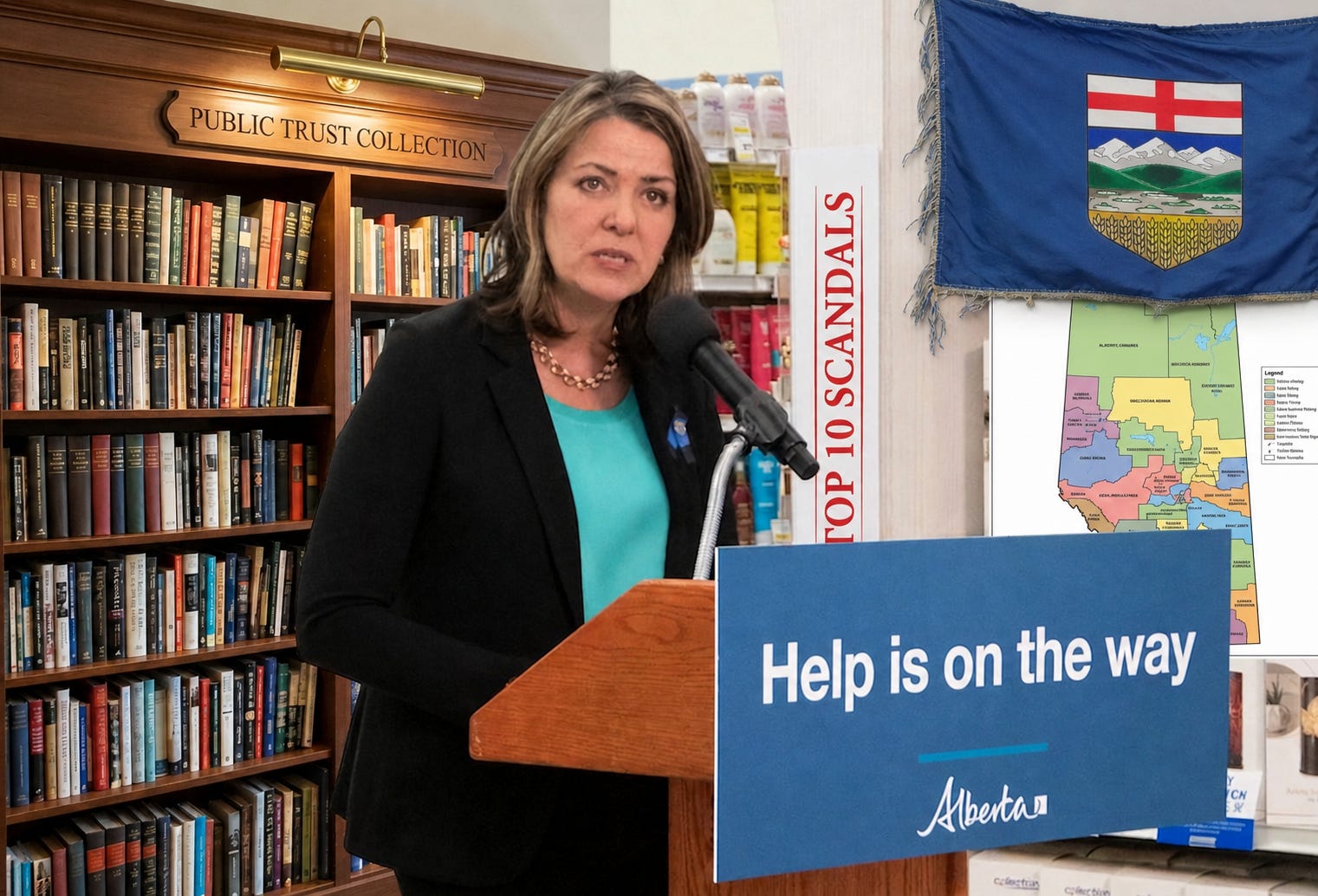
10. The Turkish Tylenol Fiasco
The government bypassed standard procurement channels to import children’s pain medication from Turkey during a national shortage. Alberta signed a contract worth $70M to pay for the medication, used very little of it due to safety concerns, donated some and then spent another $700K to have the remainder destroyed.
9. Use of The Notwithstanding Clause
The use of the Notwithstanding Clause has shifted from a rare constitutional tool to political leverage. Alberta’s UCP government has now used it twice. First to override constitutional protections for transgender youth, then again to end a strike by teachers. It sends a clear message: if courts push back, the government is willing to go around them.
8. Book Bans and Library Pressure
In 2025, the Alberta government ordered school boards to pull roughly 160 titles from K–12 libraries, most of them graphic novels, citing explicit sexual content. Many of those books also touched on LGBTQ+ themes, which quickly turned a content decision into a cultural flashpoint. What had been a creeping conversation about “appropriate material” became a top-down removal.
7. Curriculum Overhaul
The K–6 curriculum rewrite sparked strong pushback from the Alberta Teachers’ Association. The ATA called it “fatally flawed,” with most teachers saying they were uncomfortable teaching it. They say educators were largely shut out, and the content is too complex, not age-appropriate, and too Eurocentric, missing Indigenous and francophone perspectives. ATA president Jason Schilling says parts of it feel political, not focused on students.
6. Gerrymandering and Electoral Boundaries
A non-partisan commission proposed adding seats in Calgary and Edmonton to reflect population growth, but the government rejected that plan and ordered a new review. Critics say the alternative proposals, especially “urban-rural hybrid” ridings, would dilute city votes and favour the party’s rural base. The UCP argues it’s about fair representation outside major cities. The controversy is simple: whether this redraw reflects population, or reshapes it to win the next election.
5. Alberta Health Services Procurement
The Alberta Health Services procurement scandal has escalated into an RCMP investigation into how major health contracts were awarded. Allegations include political interference, insider access, and questionable deals involving millions in public funds. The story has taken a darker turn, with reporters and potential witnesses describing being followed, photographed, and intimidated. It’s no longer just about contracts, it’s about accountability, and who is trying to keep a lid on the story.
4. The Voters List Leak
The Alberta voters list which includes names, addresses and unique voter identifications was posted online by the separatist organization, the Centurion Project. Elections officials say the data was given legally to a registered political party, but then shared with the group. Its use and circulation have raised serious concerns. Critics warn the list could be used to target or profile voters, or worse — to stalk or harass people.
3. Separatism Goes Mainstream
Alberta separatism has moved out of the fringes, driven by Western alienation, frustration over federal energy policy, and a growing sense that Ottawa isn’t listening. While Premier Danielle Smith does not call herself a separatist, her government’s “sovereignty first” approach—and changes that make it easier to trigger a referendum on separation as early as this fall—have given the movement real momentum.
2. Political Interference in Institutions
From health care to elections oversight, there’s a growing perception that independent bodies are being hollowed out. At Alberta Health Services, procurement decisions are now under RCMP investigation amid allegations of political interference. Changes to Elections Alberta have reduced its investigative reach just as concerns about the voters list and enforcement are growing. And across agencies and boards, leadership shakeups and tighter central control have raised questions about how independent these institutions really are. When watchdogs lose teeth, accountability is weakened.
1. The Slow Erosion of Democratic Norms
This is the pattern: not a single scandal, but the cumulative effect of many. Each one erodes something fundamental, transparency, fairness, trust, through small changes in rules, norms, and oversight. Nothing breaks overnight. It shifts, increment by increment, until the guardrails are weaker, the checks quieter, and the system no longer works the way it once did.
The Bottom Line
On their own, each of these stories can be argued, spun, or ignored. Together, they point somewhere, and it’s not subtle.
The issue isn’t whether controversy exists. It’s whether anyone is paying attention to the pattern it’s forming. Because when this many controversies stack up at once, you’re no longer looking at isolated decisions. You’re looking at a governing approach.
That’s the story.
Excellent summary. It's easy to lose track of the issues, nice to have a checklist of outrages to jog the old memory. I mostly agree with your priorities but I would have ranked separatism at the top ( trying to break up my country gets my attention).
It’s a pattern taken from her hero, IQ47. Never concentrate on anything for too long, just keep it all moving, keep the distractions and destruction happening. All in the hopes we’ll become exhausted and then she will really lay down her cards. Just my POV and thank you for putting it all together.